Wait on That Car: Why Your Pre-Approval Isn't Final Until Closing
Decorey Jones
Author
You got the call. Your lender sent over that pre-approval letter, and it feels amazing. You're officially pre-approved for a home! You can finally start house hunting in Dallas with confidence. Your offer will carry weight. Sellers will take you seriously. The dream feels closer than ever.
Then you see a car you love on the lot. Your current vehicle has been on borrowed time for months. This feels like the perfect moment to make the upgrade. After all, you've already been approved for your mortgage, right?
Stop. Before you sign anything on that vehicle, we need to talk about what pre-approval actually means and why that shiny new car could cost you your home.
Understanding the Conditional Nature of Pre-Approval
Here's the thing that catches most buyers off guard: you may not necessarily get a mortgage if you're preapproved. If your financial situation changes for the worse between preapproval and closing or if the home you want to buy isn't appraised reasonably close to the selling price, you may end up not being approved when you apply for the mortgage.
That pre-approval letter sitting on your kitchen counter? It's not a guarantee. It's conditional approval. You're getting a conditional commitment that says we've looked at your finances, and yes, we're willing to lend you up to this specific amount. The key word here is "conditional." Your lender hasn't fully approved you yet. They've just peeked at your financial picture and said it looks good so far.
Most pre-approval letters are valid for 60 to 90 days. After that, you'll need to update your financials and possibly get another credit check. If your financial situation changes, the letter could be revoked.
The Final Check Before Closing
Here's what most people don't realize: even after you make an offer and get your home under contract, your lender isn't done checking on you. Expect your lender to look at your bank account, credit and debts again shortly before closing to verify that no major changes to your financial picture have occurred.
A few days before your Dallas home closes, your lender will run another credit check and pull your employment verification. They're making sure nothing changed since you initially applied. This is your moment of truth. If something's different, you could lose your loan.
How a Car Purchase Derails Your Mortgage
When you buy that car, especially if you finance it, multiple problems hit your financial profile at once:
Your Debt-to-Income Ratio Climbs
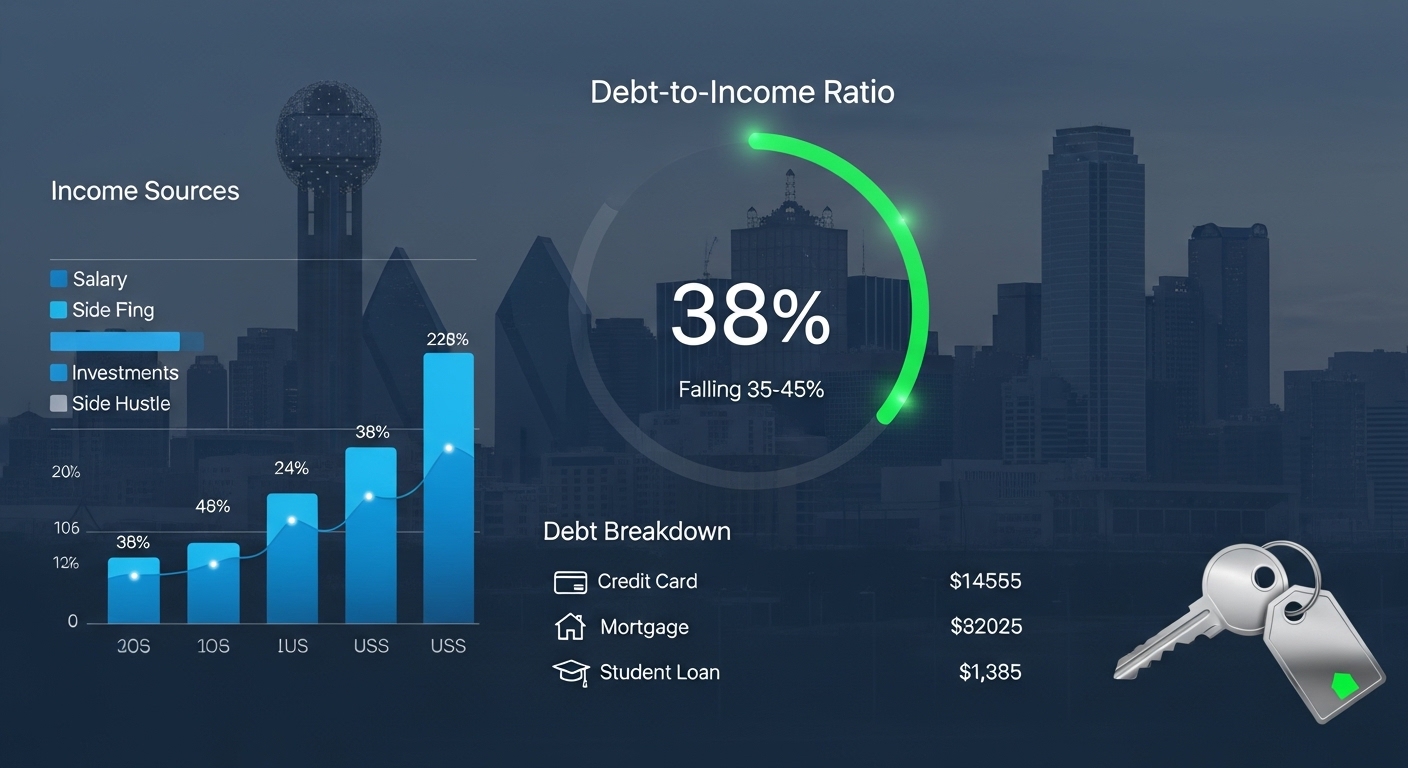
When you make a big purchase and finance it through a loan or credit card, you increase your monthly debt obligations. This increase can push your DTI ratio above the lender's allowable limit, potentially leading to a reduction in your loan amount—or even outright denial.
Lenders care deeply about DTI. Most want to see a ratio of 43% or lower. That new $400 car payment every month? It gets factored in. When your lender recalculates your DTI ratio before closing, they might discover you no longer qualify for that mortgage you've been planning around.
Your Credit Score Takes a Hit
Applying for credit to make a large purchase, such as a car loan or store credit card, results in a hard inquiry on your credit report. Too many hard inquiries in a short period of time can lower your credit score. Additionally, if you open new accounts or carry large balances, your credit utilization ratio (how much credit you use compared to your limits) rises, further hurting your score.
Even a small dip in your credit score matters. A lower credit score can significantly affect your mortgage. It might lead to higher interest rates or even cause lenders to revoke your pre-approval. In the worst-case scenario, your mortgage application could be denied altogether.
Your Cash Reserves Disappear
Beyond the debt issue, buying a car depletes your liquid assets. Closing on a home involves various costs, including down payments, closing costs, and potential moving expenses. Making large purchases before closing can deplete your available funds, leaving you short on cash when it's time to finalize the purchase.
Lenders look at your cash reserves. They want to know you have money after closing. When you drain your savings to buy a car, you're showing them exactly what they don't want to see.
Real Talk About the Consequences
A big purchase – one that increases your debt-to-income (DTI) ratio or drains your cash reserves – can be enough to cause your lender to pull the plug on your mortgage application.
We're not talking about some theoretical risk here. This happens. Buyers get excited about homeownership, make a major purchase, and then get a devastating call from their lender a week before closing. The deal falls through. The earnest money is gone. The sellers have already started planning their move. Your lease on your current place has expired.
The timing feels cruel because you thought you were safe. You had been approved. You made an offer. You were under contract. But the lender's final review caught the car purchase, and suddenly you're in a nightmare scenario.
Why Lenders Do These Final Checks
This isn't your lender being paranoid or overly cautious. The home purchase process takes time, mortgage lenders will reassess a few key criteria before officially closing on a loan. Some things a lender checks before closing include your credit score, income and debts. Lenders are primarily looking to ensure nothing has changed since you initially applied for the mortgage.
From their perspective, they're managing risk. A mortgage is a massive loan. If your financial situation changed significantly between approval and closing, that changes their risk calculation. That car payment is extra debt they need to account for.
What You Should Wait On (and What You Can Do)
Between applying for a mortgage and closing on your house, aim to keep your personal finances and employment status as steady as possible, and avoid making any major purchases.
This includes cars, furniture, boats, jewelry, or anything else where you'd be taking on debt or spending significant cash. Save the home upgrades for after you close. Plan that vacation for next year. Keep your current vehicle running a little longer.
The one thing you can do? Use your credit card for small purchases and pay off the balance in full. While you're waiting to close on a home, you can still use your credit card, but it's best to only use it for small purchases and pay off the balance in full. Do not make large purchases you cannot afford to pay off that'll leave you carrying a significant balance each month.
Your Timeline Matters
If you're thinking about buying a home in Dallas in the near future, the time to be cautious is now. Don't wait until you're already under contract. Start protecting your financial profile today by avoiding new debt. Keep your credit card balances low. Make sure you're paying every bill on time. Maintain your employment. These actions compound when it comes time for your final approval.
Get a Real Estate Agent in Your Corner
This is exactly the kind of situation where having an experienced real estate agent matters. A good agent knows the mortgage process inside and out. They'll coach you on what to avoid. They'll answer your questions about whether something you're considering might jeopardize your loan. They'll be the voice of reason when you're tempted to make that car purchase.
If you're buying in Dallas and want someone who understands these nuances and can guide you through the entire process, that's what I'm here for. I've helped countless clients navigate the stretch between pre-approval and closing without derailing their mortgages.
You can also search homes in Dallas on HOUSEJET to see what's available in your price range while you work on securing your pre-approval.
The Payoff
I get it. You're excited. You're about to buy a home. You want to celebrate. You want to start fresh with a new car too. That feeling of simultaneous momentum is real.
But here's what's better than a new car: actually closing on your home. Signing those final documents. Getting those keys. Moving into your new place in Dallas. Having a home of your own.
The car can wait six months. Your home can't. Once you close, you can buy whatever vehicle you want. You'll be a homeowner with your financial profile locked in. Your lender won't be rechecking anything. You'll have complete freedom to make that purchase.
That pre-approval letter represents opportunity. Protect it. Guard it. Keep your finances stable until you hear those magical words: "Congratulations, you've closed on your home." Then go buy that car.
Until then, drive what you've got and dream about your new house instead. It's the smarter move, and you know it.
More Articles

For Sellers
Get the best value for your home with our expert guidance and market insights.
98%
List Price
14
Avg. Days
The Best Choice in Finding Your New Home.
